

COCA-COLA BRADFORD, PENNSYLVANIA BLUE GLASS SELTZER BOTTLE ~ CZECHOSLOVAKIA
COCA-COLA BRADFORD, PENNSYLVANIA BLUE GLASS SELTZER BOTTLE ~ CZECHOSLOVAKIA
SOLD $475.00 Sold: Dec 23, 2024 on eBayOriginal Listing Description
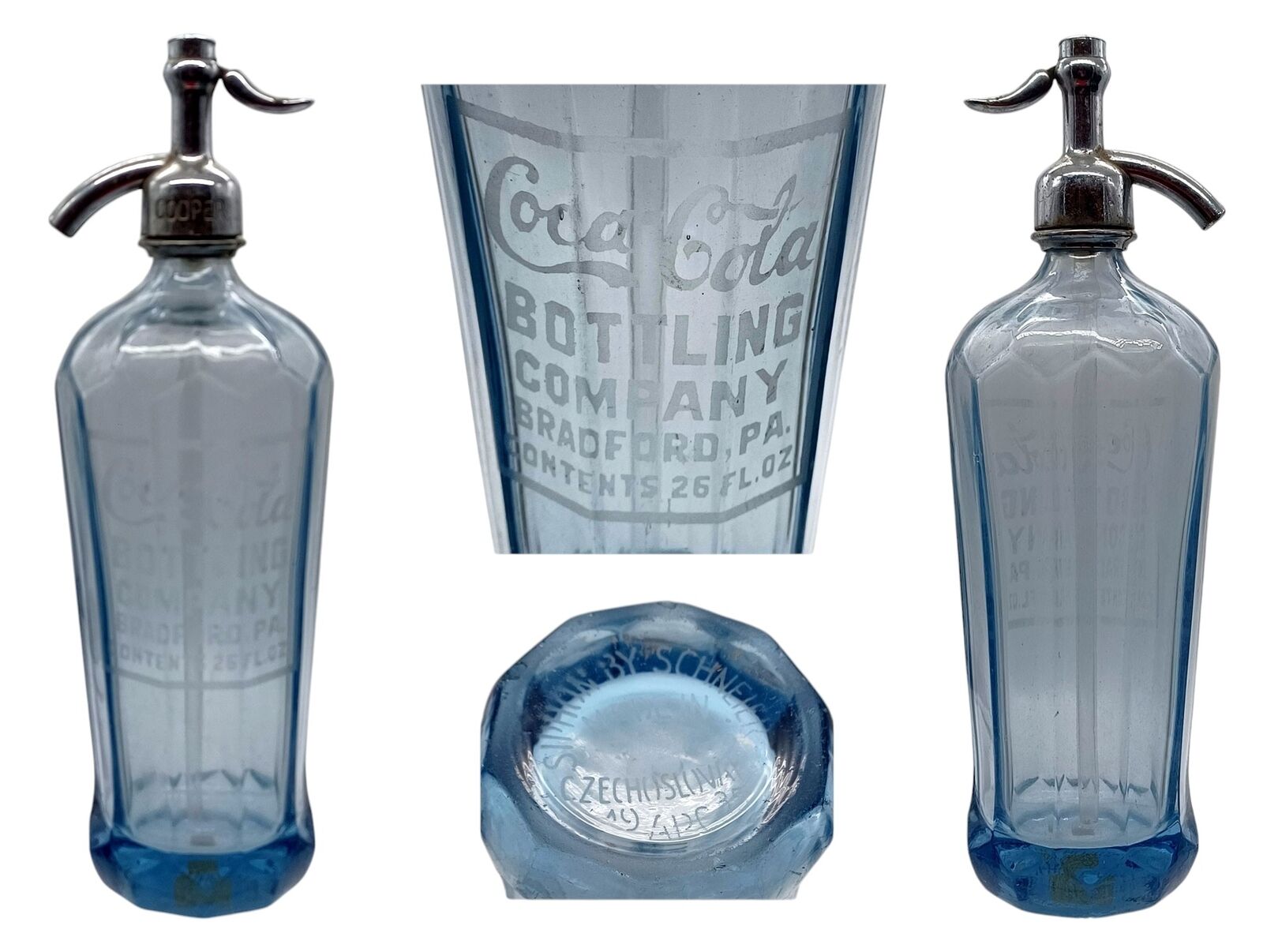
COCA-COLA BRADFORD, PENNSYLVANIA BLUE GLASS SELTZER BOTTLE ~ CZECHOSLOVAKIA \\\\\\\\\\\\\\\\\\\\\\\\\\\\\\\\\\\\\\\\\\\\\\\\\\\\\\\\\\ THIS MONTH, WE ARE PLEASED TO OFFER MANY FINE ANTIQUE AND COLLECTIBLE ARTIFACTS AND RARITIES FROM MISSISSIPPI AND LOUISIANA ESTATES AND PRIVATE COLLECTIONS PLEASE CHECK OUR OTHER EBAY LISTINGS FOR MORE EXAMPLES OF EARLY ANTIQUES & COLLECTIBLES \\\\\\\\\\\\\\\\\\\\\\\\\\\\\\\\\\\\\\\\\\\\\\\\\\\\\\\\\\ DESCRIPTION A FINE EXAMPLE OF AN EARLY COCA-COLA SELTZER BOTTLE, STANDING 12" TALL AND MEASURING 4.5" IN DIAMETER TO THE SHOULDER. CRAFTED FROM BLUE GLASS FEATURING ETCHED LETTERS READING ~ COCA-COLA BOTTLING COMPANY BRADFORD, PA. ~ CONTENTS 26 FL. OZ. THE TOP IS FITTED WITH A CHROME-PLATED METAL SPIGOT, MARKED WITH THE NAME COOPER, DESIGNED TO DISPENSE THE SELTZER WATER UNDER PRESSURE. THE BASE OF THE BOTTLE FEATURES ETCHED LETTERS READING MADE IN CZECHOSLOVAKIA. ADDITIONALLY, THE BOTTOM BEARS THE MARKING SIPHON BY SCHNEIDER & CO. SELTZER BOTTLES LIKE THIS WERE USED THROUGHOUT THE EARLY TO MID-20TH CENTURY FOR DISPENSING CARBONATED WATER. THESE BOTTLES WERE TYPICALLY RETURNED, CLEANED, AND REFILLED BY LOCAL BOTTLERS, MAKING THEM AN INTEGRAL PART OF HOME, BAR, TAVERN, CAFE, SODA FOUNTAIN AND RESTAURANT BEVERAGE SERVICE BEFORE THE WIDESPREAD USE OF DISPOSABLE BOTTLES AND CANS. THE HEAVY GLASS CONSTRUCTION ALLOWED THE BOTTLES TO WITHSTAND THE PRESSURE OF CARBONATED WATER, AND THE SPIGOT ENABLED CONTROLLED POURING. THIS EXAMPLE, WITH ITS ETCHED LETTERING AND DISTINCTIVE BLUE GLASS, OFFERS A GLIMPSE INTO THE HISTORY OF LOCAL COCA-COLA BOTTLING OPERATIONS AND THE ERA OF REFILLABLE SODA SIPHONS. A TRUE ARTIFACT HIGHLIGHTING BOTH THE HERITAGE OF COCA-COLA AND THE CRAFTSMANSHIP OF EARLY 20TH-CENTURY GLASS MANUFACTURING. CONDITION REPORT > A NOTABLY WELL PRESERVED EXAMPLE ~ PERHAPS TYPICAL AND MINOR ELEMENTS RELATIVE TO AGE, USE AND MATERIALS ~ NO OVERT ISSUES. HISTORY of COCA-COLA BOTTLING in BRADFORD, PENNSYLVANIA The Coca-Cola Bottling Company of Bradford, Pennsylvania, has a history that reflects the broader story of Coca-Cola's expansion across the United States during the early 20th century. Located in McKean County in the northwestern part of Pennsylvania, Bradford's Coca-Cola bottling operation served a vital role in distributing the popular beverage to the region, which includes parts of Pennsylvania, western New York, and other nearby areas. The Bradford Coca-Cola Bottling Company was established in the early 20th century, a period when Coca-Cola was actively expanding its network of independent bottlers. This system involved local entrepreneurs obtaining exclusive rights to bottle and distribute Coca-Cola in their respective territories. These bottlers would receive the syrup concentrate from The Coca-Cola Company, mix it with carbonated water, bottle it, and then distribute it within their designated areas. Bradford, Pennsylvania, is a small city in McKean County, situated in the northwestern part of the state near the border with New York. Its history is closely tied to the oil industry, which played a central role in the city's growth and economic development. The city was settled in the 1820s, originally as a small, rural community in a region known for its dense forests and wildlife. The areas development accelerated with the discovery of oil in the late 19th century. In 1875, oil was found near Bradford, which triggered a local oil boom, transforming the city into a bustling industrial hub. This discovery came shortly after the first major U.S. oil strike in Titusville, Pennsylvania, in 1859, and Bradford quickly became a key part of the oil region. The Bradford Oil Field, located in the surrounding hills, was one of the most productive oil fields in the world at its peak. By the late 1870s and into the 1880s, Bradford was at the center of a major oil rush, attracting prospectors, workers, and entrepreneurs from across the country. The citys population swelled, and infrastructure developed rapidly to support the booming industry, including the construction of railroads and refineries. One of the major developments was the establishment of the Kendall Refining Company in Bradford in 1881, which became one of the citys major employers. This refinery specialized in the production of lubricants and motor oils, contributing to the city's reputation as a center for oil refining and related industries. Kendall's motor oil products were known for their high quality, and the company remained an important player in the industry for many years. Bradford's growth during this period was marked by a mix of prosperity and the challenges typical of boomtowns, such as rapid population growth, economic volatility, and fluctuating fortunes tied to the price of oil. The city also experienced fires and other growing pains that were common in rapidly developing industrial towns of the time. As the oil boom declined in the early 20th century, Bradford transitioned into a more stable, yet diversified, industrial economy. While the local oil fields remained in production, the focus shifted to refining and manufacturing. The city maintained a role in the oil industry through companies like the Kendall Refining Company, and oil production continued on a smaller scale as secondary recovery techniques kept the wells producing longer than initially expected. In addition to its industrial base, Bradford became known for higher education with the founding of the University of Pittsburgh at Bradford in 1963. This branch of the University of Pittsburgh helped to support the local economy and provided educational opportunities for residents, contributing to the city's cultural and social development. Throughout the 20th century and into the 21st, Bradford has faced the challenges typical of many small industrial cities, such as the decline of traditional manufacturing and the need to adapt to economic changes. Today, Bradford is a community that blends its industrial heritage with natural attractions like the nearby Allegheny National Forest. It retains historical landmarks from its oil-boom days, which reflect the citys important role in the early days of America's oil industry. The Penn-Brad Oil Museum is one example of how the city preserves its history. This museum documents the history of oil production in the region and highlights Bradfords unique role in the industry. Bradford is also home to Zippo Manufacturing Company, famous for producing Zippo lighters since 1932. The company is a symbol of Bradfords ability to adapt to new industries and remains a major employer and tourist attraction with the Zippo/Case Museum. Today, while the oil industry is no longer as dominant as it once was, Bradford remains a city proud of its rich history and industrial heritage. The local community continues to celebrate its past, even as it adapts to the evolving economic landscape of northwestern Pennsylvania. \\\\\\\\\\\\\\\\\\\\\\\\\\\\\\\\\\\\\\\\\\\\\\\\\\\\\\\\\\ PLEASE USE THE EBAY "CONTACT SELLER" FUNCTION TO CONTACT US AND RESOLVE ANY QUESTIONS BEFORE BIDDING FREE SHIPPING ON THIS ITEM TO DOMESTIC ADDRESSES ONLY INTERNATIONAL SHIPPING AVAILABLE FOR SOME ITEMS ~ CONTACT US FOR A RATE QUOTE BEFORE BIDDING > (Condition: Pre-Owned)
Note: This item has been sold and is no longer available. This page serves as a historical price reference for Coca Cola collectors and appraisers.
Original Listing Description
COCA-COLA BRADFORD, PENNSYLVANIA BLUE GLASS SELTZER BOTTLE ~ CZECHOSLOVAKIA \\\\\\\\\\\\\\\\\\\\\\\\\\\\\\\\\\\\\\\\\\\\\\\\\\\\\\\\\\ THIS MONTH, WE ARE PLEASED TO OFFER MANY FINE ANTIQUE AND COLLECTIBLE ARTIFACTS AND RARITIES FROM MISSISSIPPI AND LOUISIANA ESTATES AND PRIVATE COLLECTIONS PLEASE CHECK OUR OTHER EBAY LISTINGS FOR MORE EXAMPLES OF EARLY ANTIQUES & COLLECTIBLES \\\\\\\\\\\\\\\\\\\\\\\\\\\\\\\\\\\\\\\\\\\\\\\\\\\\\\\\\\ DESCRIPTION A FINE EXAMPLE OF AN EARLY COCA-COLA SELTZER BOTTLE, STANDING 12" TALL AND MEASURING 4.5" IN DIAMETER TO THE SHOULDER. CRAFTED FROM BLUE GLASS FEATURING ETCHED LETTERS READING ~ COCA-COLA BOTTLING COMPANY BRADFORD, PA. ~ CONTENTS 26 FL. OZ. THE TOP IS FITTED WITH A CHROME-PLATED METAL SPIGOT, MARKED WITH THE NAME COOPER, DESIGNED TO DISPENSE THE SELTZER WATER UNDER PRESSURE. THE BASE OF THE BOTTLE FEATURES ETCHED LETTERS READING MADE IN CZECHOSLOVAKIA. ADDITIONALLY, THE BOTTOM BEARS THE MARKING SIPHON BY SCHNEIDER & CO. SELTZER BOTTLES LIKE THIS WERE USED THROUGHOUT THE EARLY TO MID-20TH CENTURY FOR DISPENSING CARBONATED WATER. THESE BOTTLES WERE TYPICALLY RETURNED, CLEANED, AND REFILLED BY LOCAL BOTTLERS, MAKING THEM AN INTEGRAL PART OF HOME, BAR, TAVERN, CAFE, SODA FOUNTAIN AND RESTAURANT BEVERAGE SERVICE BEFORE THE WIDESPREAD USE OF DISPOSABLE BOTTLES AND CANS. THE HEAVY GLASS CONSTRUCTION ALLOWED THE BOTTLES TO WITHSTAND THE PRESSURE OF CARBONATED WATER, AND THE SPIGOT ENABLED CONTROLLED POURING. THIS EXAMPLE, WITH ITS ETCHED LETTERING AND DISTINCTIVE BLUE GLASS, OFFERS A GLIMPSE INTO THE HISTORY OF LOCAL COCA-COLA BOTTLING OPERATIONS AND THE ERA OF REFILLABLE SODA SIPHONS. A TRUE ARTIFACT HIGHLIGHTING BOTH THE HERITAGE OF COCA-COLA AND THE CRAFTSMANSHIP OF EARLY 20TH-CENTURY GLASS MANUFACTURING. CONDITION REPORT > A NOTABLY WELL PRESERVED EXAMPLE ~ PERHAPS TYPICAL AND MINOR ELEMENTS RELATIVE TO AGE, USE AND MATERIALS ~ NO OVERT ISSUES. HISTORY of COCA-COLA BOTTLING in BRADFORD, PENNSYLVANIA The Coca-Cola Bottling Company of Bradford, Pennsylvania, has a history that reflects the broader story of Coca-Cola's expansion across the United States during the early 20th century. Located in McKean County in the northwestern part of Pennsylvania, Bradford's Coca-Cola bottling operation served a vital role in distributing the popular beverage to the region, which includes parts of Pennsylvania, western New York, and other nearby areas. The Bradford Coca-Cola Bottling Company was established in the early 20th century, a period when Coca-Cola was actively expanding its network of independent bottlers. This system involved local entrepreneurs obtaining exclusive rights to bottle and distribute Coca-Cola in their respective territories. These bottlers would receive the syrup concentrate from The Coca-Cola Company, mix it with carbonated water, bottle it, and then distribute it within their designated areas. Bradford, Pennsylvania, is a small city in McKean County, situated in the northwestern part of the state near the border with New York. Its history is closely tied to the oil industry, which played a central role in the city's growth and economic development. The city was settled in the 1820s, originally as a small, rural community in a region known for its dense forests and wildlife. The areas development accelerated with the discovery of oil in the late 19th century. In 1875, oil was found near Bradford, which triggered a local oil boom, transforming the city into a bustling industrial hub. This discovery came shortly after the first major U.S. oil strike in Titusville, Pennsylvania, in 1859, and Bradford quickly became a key part of the oil region. The Bradford Oil Field, located in the surrounding hills, was one of the most productive oil fields in the world at its peak. By the late 1870s and into the 1880s, Bradford was at the center of a major oil rush, attracting prospectors, workers, and entrepreneurs from across the country. The citys population swelled, and infrastructure developed rapidly to support the booming industry, including the construction of railroads and refineries. One of the major developments was the establishment of the Kendall Refining Company in Bradford in 1881, which became one of the citys major employers. This refinery specialized in the production of lubricants and motor oils, contributing to the city's reputation as a center for oil refining and related industries. Kendall's motor oil products were known for their high quality, and the company remained an important player in the industry for many years. Bradford's growth during this period was marked by a mix of prosperity and the challenges typical of boomtowns, such as rapid population growth, economic volatility, and fluctuating fortunes tied to the price of oil. The city also experienced fires and other growing pains that were common in rapidly developing industrial towns of the time. As the oil boom declined in the early 20th century, Bradford transitioned into a more stable, yet diversified, industrial economy. While the local oil fields remained in production, the focus shifted to refining and manufacturing. The city maintained a role in the oil industry through companies like the Kendall Refining Company, and oil production continued on a smaller scale as secondary recovery techniques kept the wells producing longer than initially expected. In addition to its industrial base, Bradford became known for higher education with the founding of the University of Pittsburgh at Bradford in 1963. This branch of the University of Pittsburgh helped to support the local economy and provided educational opportunities for residents, contributing to the city's cultural and social development. Throughout the 20th century and into the 21st, Bradford has faced the challenges typical of many small industrial cities, such as the decline of traditional manufacturing and the need to adapt to economic changes. Today, Bradford is a community that blends its industrial heritage with natural attractions like the nearby Allegheny National Forest. It retains historical landmarks from its oil-boom days, which reflect the citys important role in the early days of America's oil industry. The Penn-Brad Oil Museum is one example of how the city preserves its history. This museum documents the history of oil production in the region and highlights Bradfords unique role in the industry. Bradford is also home to Zippo Manufacturing Company, famous for producing Zippo lighters since 1932. The company is a symbol of Bradfords ability to adapt to new industries and remains a major employer and tourist attraction with the Zippo/Case Museum. Today, while the oil industry is no longer as dominant as it once was, Bradford remains a city proud of its rich history and industrial heritage. The local community continues to celebrate its past, even as it adapts to the evolving economic landscape of northwestern Pennsylvania. \\\\\\\\\\\\\\\\\\\\\\\\\\\\\\\\\\\\\\\\\\\\\\\\\\\\\\\\\\ PLEASE USE THE EBAY "CONTACT SELLER" FUNCTION TO CONTACT US AND RESOLVE ANY QUESTIONS BEFORE BIDDING FREE SHIPPING ON THIS ITEM TO DOMESTIC ADDRESSES ONLY INTERNATIONAL SHIPPING AVAILABLE FOR SOME ITEMS ~ CONTACT US FOR A RATE QUOTE BEFORE BIDDING > (Condition: Pre-Owned)
Note: This item has been sold and is no longer available. This page serves as a historical price reference for Coca Cola collectors and appraisers.